
Article Schema
Enhances visibility for blogs and publications.

Did you know that implementing structured data can dramatically enhance your website's visibility and user engagement? Let's uncover the essential insights you need to master this powerful SEO strategy.
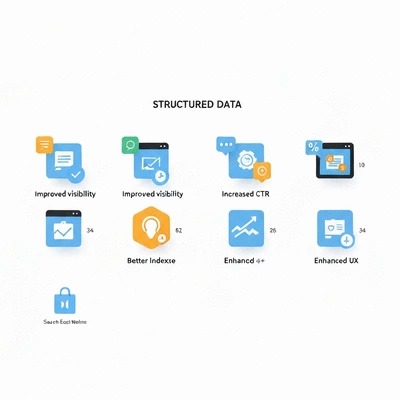
Structured data is crucial for improving visibility and user experience. Below, we highlight the main types of schema markup and the benefits they bring to your website.
Enhances visibility for blogs and publications.
Improves local search presence for businesses.
Showcases e-commerce products with rich details.
Promotes events and drives attendance effectively.
Enhanced rich snippets in search results.
Higher click-through rates and user engagement.
Accurate content categorization by search engines.
Quick and informative search results for users.
Structured data and schema markup are essential tools for enhancing your website's visibility in search engines. At All for Domains, we understand that navigating the complexities of SEO can feel overwhelming. However, mastering these concepts can significantly improve how search engines interpret your content, ultimately increasing your site's traffic!
In this section, we'll explore structured data, its importance for SEO, and provide an overview of various schema markup types that can help your website stand out in search results.
Structured data refers to a standardized format for providing information about a page and classifying its content. By implementing structured data on your site, you help search engines like Google understand the context of your content. This leads to better indexing, which can enhance your rankings in search results! For a deeper dive into the significance, you can refer to insights from the HTTP Archive's 2024 Web Almanac on Structured Data.
Structured data plays a crucial role in SEO because it allows you to provide detailed information that can lead to rich snippets, knowledge panels, and other enhanced search results. These elements not only boost your visibility but also encourage users to click through to your site.

There are various types of schema markup available that cater to different content types. Here are some common schema types to consider:
By selecting the right schema type for your content, you can effectively communicate your offerings and help search engines display your information more accurately.
Schema.org provides a shared vocabulary for webmasters to use when indicating the precise meaning of their content. This initiative is a collaboration between major search engines like Google, Bing, and Yahoo. Utilizing this vocabulary allows you to apply specific markup that search engines recognize and utilize for rich results. You can learn more about how Schema Markup impacts SEO in 2023 and beyond.
As a digital entrepreneur, I can assure you that leveraging Schema.org can drastically improve your online presence. With the right vocabulary, you can provide clarity and context to your content, making it easier for search engines to understand how to categorize and display your information.
Implementing schema markup from Schema.org can lead to enhanced visibility in search results. This means your listings might display additional information such as ratings, pricing, or even availability. Having this information right in the search results can significantly increase click-through rates!
Overall, by utilizing Schema.org and its vocabulary effectively, you're setting your website up for better indexing, improved user engagement, and higher chances of appearing in coveted rich snippets. For more general guidance on search optimization, you can check resources from Digital.gov on search topics.
Now that we understand the basics of structured data and schema markup, let's dive into the tangible benefits of implementing these techniques on your website. Trust me, the improvements you'll see in both visibility and user engagement will be well worth the effort!
Structured data is a standardized format that provides information about a web page's content, helping search engines understand it better. It's crucial for SEO because it enables rich snippets, improves visibility, and can lead to higher click-through rates by making search results more informative.
Common types include Article Schema for blogs and publications, Local Business Schema for enhancing local search presence, Product Schema for e-commerce sites, and Event Schema for promoting events.
Schema.org provides a shared vocabulary that webmasters use to mark up their content. This standardized vocabulary helps major search engines interpret the content's meaning precisely, leading to enhanced search visibility and rich results.
The key benefits include improved search engine visibility through rich snippets, increased click-through rates (CTR), better indexing and accurate content categorization by search engines, and an enhanced user experience with more informative search results.
You should identify relevant schema types, use tools like Google's Markup Helper to create JSON-LD code, test your markup with Google's Structured Data Testing Tool, and monitor performance via Google Search Console.
Did you know? Implementing schema markup can not only improve your website's visibility but also enhance user experience by displaying rich snippets directly in search results. To maximize impact, ensure that you keep your schema markup updated as your content evolves. Regularly check for new types of schema that could benefit your site, particularly those relevant to your industry!
As we wrap up our discussion on structured data and schema markup, it’s essential to understand why implementing these strategies is crucial for your SEO efforts. Not only does structured data provide enhanced visibility in search results, but it also improves user experience by offering rich snippets and other informative elements. When you use schema markup effectively, you are essentially giving search engines a better understanding of your content, which can lead to higher click-through rates!
Here’s a quick recap of the benefits you can expect from structured data:
By embracing these benefits, you position your website to not only attract more visitors but also provide them with a more engaging online experience. This approach aligns perfectly with our mission at All for Domains, where empowering users is a top priority!
Now that you’re equipped with knowledge about the importance of structured data, it’s time to take action! Here are some actionable steps to help you begin implementing structured data on your website:
Each of these steps will guide you toward a more effective SEO strategy. Remember, the world of SEO and structured data is always evolving. At All for Domains, I believe in the value of continuous learning. Stay updated on the latest schema trends and best practices to ensure your online presence remains robust and competitive!
Are you ready to dive into the world of structured data? Let’s make your website stand out in search results and offer a better experience for your visitors. The journey to mastering SEO starts now!
Here is a quick recap of the important points discussed in the article:
Domain Management Tools You Need

Every successful online venture starts with strong domain management. Are you ready to master the fu
Understanding Web Hosting Hidden Costs

Have you ever signed up for a service only to find out that the cost skyrockets after the first year
Understanding Uptime Guarantees in Hosting

What if a mere percentage could determine the success of your online presence? Understanding uptime

Domain Management Tools You Need
Understanding Web Hosting Hidden Costs
Understanding Uptime Guarantees in Hosting
Understanding Domain Names and SEO
Competitor SEO Analysis Made Simple